What to Do When There's a Months-Long Waitlist to See a Psychiatrist
The median wait for a psychiatrist is 67 days. Here's what to do while waiting, when to escalate care, and how to find faster options like online psychiatry.
Key takeaways
- If you're on a psychiatrist’s waitlist, you have options: ask your primary care doctor for interim medication support, explore online psychiatry for shorter wait times, or expand your search to include psychiatric nurse practitioners.
- The median wait for an in-person psychiatrist appointment is 67 days, but telepsychiatry appointments are 43 days, a 35% reduction.1
- If your symptoms are worsening, you've run out of medication, or you're having thoughts of self-harm, do not wait for a scheduled appointment. Contact your PCP, call 988, or seek emergency care.
- Online psychiatry platforms that accept insurance can often schedule first appointments within days, not months.
- Understanding which providers can prescribe psychiatric medication (psychiatrists, psychiatric nurse practitioners, PCPs) gives you more pathways to care.


The gap between "I need help" and "I'm getting help" is one of the most common frustrations in psychiatric care today. It’s the result of both a shortage of psychiatric providers and an uneven distribution of those providers throughout the country. Many patients spend weeks or months on a waitlist before getting their first appointment. By the time they finally sit down for a visit, their symptoms have often gotten worse.
The median wait for an in-person psychiatrist appointment in the US is 67 days.1 If you're stuck on a waitlist, you have several options: ask your primary care doctor for interim medication support, explore online psychiatry (where wait times can be significantly shorter), or broaden your search to include psychiatric nurse practitioners and other prescribers. This article walks through each of those options, explains when waiting is not safe, and compares online and in-person psychiatric care.
Why are psychiatrist wait times so long?
Psychiatrist wait times are long because demand for mental health care far exceeds the number of practicing psychiatrists, especially in rural and underserved areas.
The numbers tell the story. The US could face a shortage of up to 21,000 psychiatrists by 2030, according to projections from the Association of American Medical Colleges.2 Right now, about 40% of the US population (roughly 137 million people) lives in a Mental Health Professional Shortage Area.3 And the problem extends well beyond psychiatrists: shortages across all behavioral health provider types are projected to continue through at least 2038.3
Even where psychiatrists do practice, getting an appointment is not guaranteed. A 2023 study that contacted nearly 950 psychiatrists across five states found that only 18.5% were available to see new patients. The most common reason? They simply were not taking new patients.1 Meanwhile, 65% of psychologists in a 2021 survey reported having no openings at all.4
Rural areas are hit hardest. Rural counties are more likely than urban counties to lack behavioral health providers entirely.3 If you live outside a major metro area, the psychiatrist shortage may mean there is no local provider to wait for in the first place. That is part of why understanding your alternatives is so important.
What can you do while waiting for a psychiatrist appointment?
While waiting for a psychiatrist, you can ask your primary care doctor for interim medication support, explore online psychiatry for faster appointments, or look into care from psychiatric nurse practitioners.
Here are the most practical steps you can take right now.
Ask your primary care doctor for help
Your PCP can prescribe many common psychiatric medications, including SSRIs and SNRIs (two common types of antidepressant medication) used for anxiety and depression. They can also adjust dosages if you are already on medication and your symptoms are changing.
Think of your PCP as a bridge. They may not specialize in psychiatry, but they can provide medication support that keeps you stable until you see a specialist. They can also refer you to faster options, including online psychiatry platforms or psychiatric nurse practitioners in your area.
Explore online psychiatry
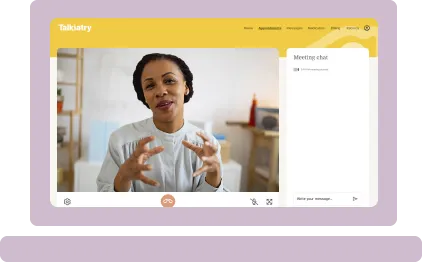
Telepsychiatry wait times are significantly shorter than in-person options. The same 2023 study that found a 67-day median wait for in-person appointments found a median of just 43 days for telepsychiatry.1 Many online platforms can schedule first appointments within days.
Online psychiatry delivers the same clinical service as an in-person visit, conducted via video chat. A first psychiatric visit still includes a full evaluation of your symptoms, medical history, and treatment options. Most major insurers cover telepsychiatry at the same rate as in-person visits.
Because psychiatrists are licensed by state (not by city), telehealth lets you access any provider licensed in your state, not just the ones near your zip code. That is a meaningful advantage if you are searching for a psychiatrist in an area with limited local options.
Look beyond psychiatrists
Psychiatrists are not the only providers who can prescribe psychiatric medication. Psychiatric mental health nurse practitioners (PMHNPs) can prescribe in most states, including controlled substances in many cases. Physician assistants working in psychiatric settings can do the same.
Expanding your search to include these providers can widen the available pool considerably. If you are looking for someone who can evaluate your symptoms and manage medication, a PMHNP may be able to see you weeks sooner than a psychiatrist.
Use validated provider directories
If you want to find a psychiatrist or prescriber with current availability, start with your insurance company's provider directory. You can also check the APA Psychiatrist Finder or Psychology Today's directory, both of which let you filter by insurance, specialty, and availability.
{{BLOG_AD}}
When should you not wait for a psychiatrist?
You should not wait for a psychiatrist if you've run out of medication, your symptoms are significantly worsening, or you're having thoughts of self-harm.
Not every situation can wait for a scheduled appointment. Here is how to assess urgency.
You've run out of prescribed medication
Stopping psychiatric medication abruptly can cause withdrawal symptoms and rebound effects. If you are running low or have already run out, contact your PCP or an urgent care clinic for a bridge prescription. Do not stop medication on your own without medical guidance.
Your symptoms are getting significantly worse
If anxiety, depression, or other symptoms are interfering with your ability to work, maintain relationships, or manage daily tasks, waiting months for an appointment may not be advisable. This is a good time to explore faster alternatives: online psychiatry, a psychiatric nurse practitioner, or your PCP.
You're having thoughts of self-harm
This is one situation that absolutely cannot wait. Call 988 (the Suicide and Crisis Lifeline) or go to the nearest emergency room. Crisis services are available 24/7 and do not require an appointment.
A child or adolescent needs evaluation
Child and adolescent psychiatrist shortages are even more severe than those for adult psychiatrists. If a young person's symptoms are affecting school performance or safety, pursue urgent evaluation through their pediatrician or through an online platform that serves children and adolescents. Talkiatry, for example, treats patients ages 5 and up.
How does online psychiatry compare to in-person care?
Online psychiatry is clinically comparable to in-person care for most mental health conditions, with the added benefit of shorter wait times and broader geographic access.
If you have never had a virtual psychiatric appointment, the format may feel unfamiliar. Here is what the evidence shows.
Clinical effectiveness
Telepsychiatry has been studied for over two decades. For conditions like anxiety, depression, ADHD, and bipolar disorder, research supports that telehealth visits produce comparable clinical outcomes to in-person sessions. Telehealth adoption for mental health surged during the COVID-19 pandemic and has remained well above pre-pandemic levels.5
Wait times
This is where online psychiatry has a clear advantage. The median wait for a telepsychiatry appointment is 43 days, compared to 67 days for in-person care.1 Some platforms offer first appointments within days. Talkiatry, for example, has over 800 psychiatrists licensed in 45 states, and first appointments are often available within days.
Insurance coverage
Most major insurance plans cover telepsychiatry at the same rate as in-person visits. Talkiatry is in-network with most major insurers, including Medicare, and you can check your coverage during the online assessment.
Limitations
Online psychiatry may not be appropriate for every situation. If you need a physical exam or inpatient care, you will need an in-person visit; by the same token, if you need blood work, you will have to visit a lab in person. For most outpatient psychiatric evaluations and ongoing medication management, though, video visits work well.
The bottom line
Long psychiatrist waitlists are a systemic problem caused by a nationwide provider shortage, but that does not mean they’re a dead end. You have options while you wait: your primary care doctor can provide interim medication support, psychiatric nurse practitioners can prescribe in most states, and online psychiatry offers shorter wait times with the same clinical care.
If you are on a waitlist and want to explore faster options, starting with an online assessment is a practical first move. If symptoms are worsening or medication has run out, a primary care doctor, crisis line (988), or online psychiatrist can provide faster support than a waitlist appointment.
Getting started with Talkiatry
Talkiatry is a national psychiatry practice that makes it easier to get care from doctors who listen. Start by answering a few questions online, then get matched with a psychiatrist based on your needs. From there, you can schedule a visit, often within days, and meet with your provider from home. First visits are 60 minutes, so there's time to talk through what's going on and build a treatment plan together. Talkiatry is in-network with most major insurers, and you can check your coverage during the assessment.
Take our free online assessment
Medical disclaimer and sources
The information in this article is for informational and educational purposes only and should never be substituted for medical advice, diagnoses, or treatment. If you or someone you know may be in danger, call 911 or the National Suicide and Crisis Lifeline at 988 right away.
Sources
- ScienceDirect. "Accessibility and quality of new patient appointments at psychiatrist offices across the US." Published September 2023. https://www.sciencedirect.com/science/article/abs/pii/S0163834323000877
- Association of American Medical Colleges (AAMC). "Growing psychiatrist shortage and enormous demand for mental health services." https://www.aamc.org/news/growing-psychiatrist-shortage-enormous-demand-mental-health-services
- HRSA Bureau of Health Workforce. "Behavioral Health Workforce Brief." Published December 2025. https://bhw.hrsa.gov/sites/default/files/bureau-health-workforce/data-research/Behavioral-Health-Workforce-Brief-2025.pdf
- American Psychological Association. "APA 2021 COVID-19 Practitioner Impact Survey." https://www.apa.org/monitor/2023/04/mental-health-services-wait-times
- JAMA Network Open. "Telemedicine Adoption, US Ambulatory Visits, and Total Medical Spending, 2019-2023." Published May 2026. https://jamanetwork.com/journals/jamanetworkopen/fullarticle/2848790
Frequently asked questions
How long is the average wait to see a psychiatrist?
The median wait for an in-person psychiatrist appointment in the US is 67 days. Telepsychiatry appointments have a shorter median wait of 43 days.1 Actual wait times vary depending on your location, the provider's specialty, and whether they accept your insurance.
Can my primary care doctor prescribe psychiatric medication?
Yes. Primary care doctors can prescribe many common psychiatric medications, including SSRIs, SNRIs, and other treatments for anxiety and depression. For more complex cases or controlled substances, a psychiatrist or psychiatric nurse practitioner may be a better fit. Your PCP can also refer you to one.
What is the difference between a psychiatrist and a therapist?
Psychiatrists are medical doctors who can diagnose mental health conditions, prescribe medication, and in some cases provide therapy. Therapists (including psychologists, LCSWs, and LPCs) provide talk therapy but cannot prescribe medication in most states. If you think you may need medication, a psychiatrist or psychiatric nurse practitioner is typically the right starting point.
Does insurance cover online psychiatry?
Most major insurance plans cover telepsychiatry at the same rate as in-person visits. You can verify coverage by calling your insurer or by using a platform (like Talkiatry) that checks your insurance eligibility upfront during the intake process.
What should I do if I run out of psychiatric medication while on a waitlist?
Contact your primary care doctor or an urgent care clinic right away for a bridge prescription. Do not stop psychiatric medication abruptly, as this can cause withdrawal symptoms or a return of the symptoms the medication was managing. If you are experiencing withdrawal effects, seek immediate medical attention.
Crisis and emergency resources

Call 911
If you’re having a medical or mental health emergency, call 911 or go to your nearest ER.

Call or text 988
If you are in crisis or emotional distress, call or text the 988 Suicide & Crisis Lifeline.
Like this article?
Join our newsletter.
Get regular articles and insights from our psychiatrists directly to your inbox.
See you in your inbox.